
The Crime That Had No Name
On February 7, 2023, a 17-year-old student at Oconto High School in Wisconsin sent one message that changed everything: “I’m sorry, but I think I would rather kill myself.”
He thought he was talking to a girl his age on Snapchat. He was not. A scammer spent the last hours of this young boy’s life threatening to ruin it over one photo.

Image of Landen Weigelt, teen victim
Landen Weigelt died by suicide the next day.
His stepmother worked at his school. The day before he died, other students told her something seemed wrong. She checked on him, and he said he was fine.
Landen was not fine. He did not know it yet, but he was one of the first public victims of sextortion. Sextortion is one of the fastest-growing online crimes. It targets teenagers the most, but adults can be targeted too.
This is the first part of a four-part series about sextortion and its link to suicide. We’ll look at what the data shows, who’s most at risk, and what people can do to help.
Reach out speak up, the life you save might be your own.
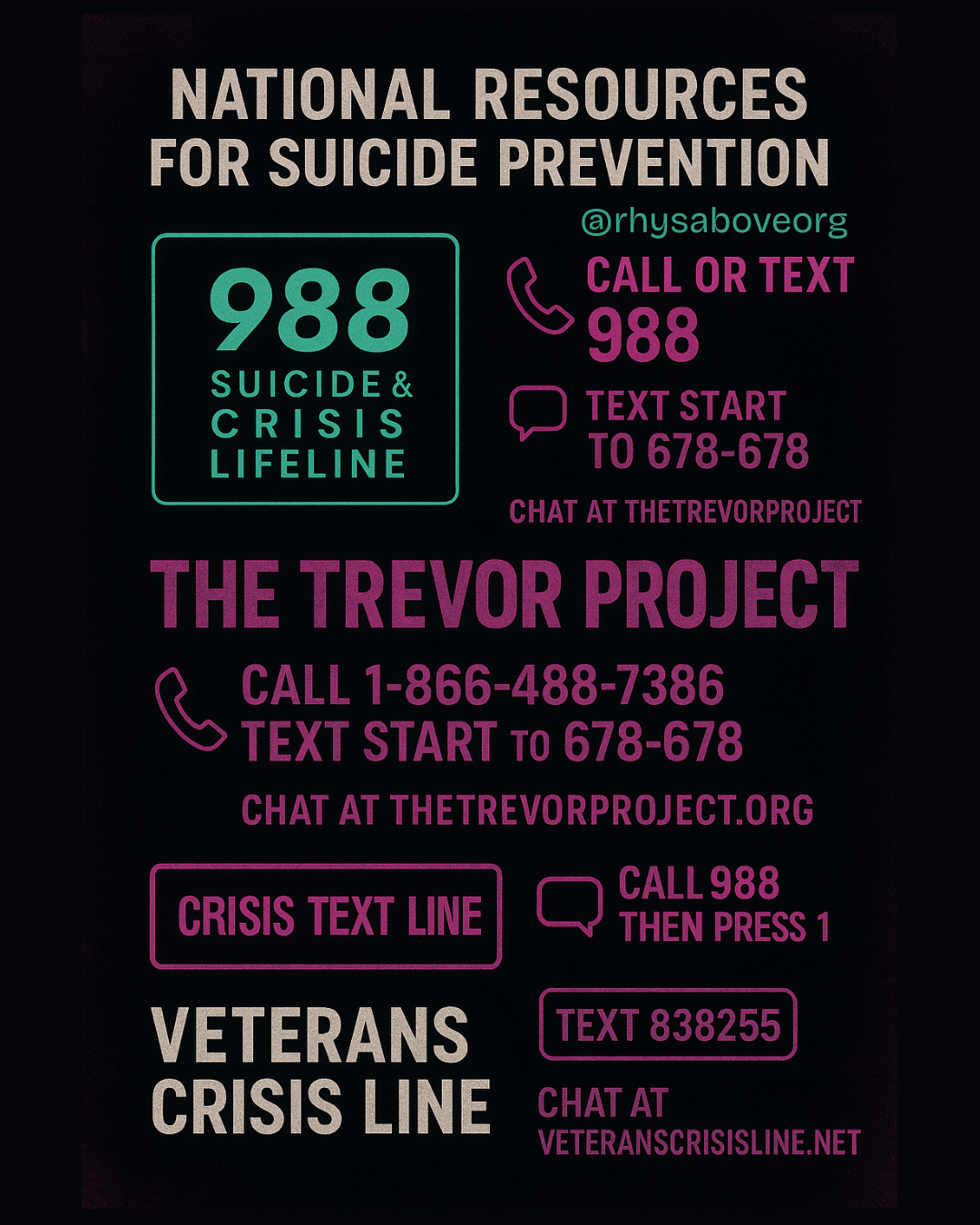
If you or someone you know may be having a mental health crisis, call or text 988 in the United States to reach the Suicide & Crisis Lifeline.
Let me pause here and say this. Suicide, much like the popular film Thirteen Reasons Why, is usually caused by more than one thing. But in cases of blackmail, it appears to narrow down to one singular cause. Sextortion is a new and very specific kind of blackmail. Victims often believe they did something normal or harmless. That is, until the threats begin.
Average, everyday people do not want private photos shared with parents, friends, schools, or employers. The threat of such shame can feel unbearable. Add in that people do lose jobs and relationships over such incidents, what started as flirting can become deadly very fast.
I am not saying young people should send sexual images. I am saying parents would benefit from accepting that this topic can enter any child’s life, sometimes earlier than expected. Children need to know they can come to a trusted adult without being shamed. That safe place can save a life. The more parents know, the better they can talk about this early, often, and in age-appropriate ways. Knowledge is power.
What is Sextortion?
Sextortion used to mean forcing someone to do something sexual by threatening their job, grade, or safety. The modern version means threatening to share private or sexual images without permission. The scammer may demand money, more images, sexual acts, or something else.
Here is how it usually works. A bad actor tricks a victim into sharing a private image. Sometimes the image is real. Sometimes it is fake or made with Ai. Then the scammer threatens to send it to family, friends, classmates, or employers. The victim may be told to pay money, send more images, or follow more demands.
Sextortion is different from revenge porn. In sextortion, the threat is the main weapon. The image may never be shared, but the fear that it could be shared can trap the victim. That fear can cause panic, anxiety, nonstop worrying, and much worse.
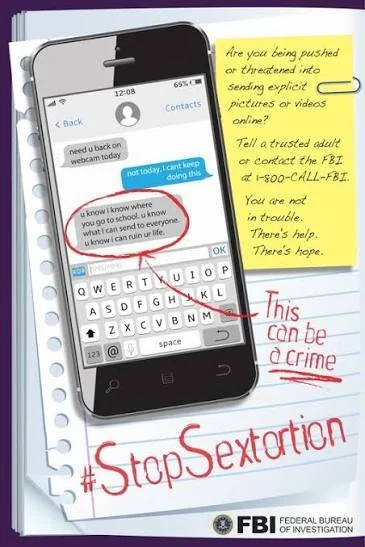
FBI warning on sextortion crime
The First Signals
Sextortion is not completely new. Cybersecurity experts and the military warned about early cases in the mid-2010s. Back then, it was often used against people who were far from home, like service members overseas. But in the last four to six years, the crime has changed. It is now often run by organized crime groups that target teenagers for money.
In January 2024, the FBI gave a public warning about this growing threat. The FBI said minors and young adults were being pressured into sending private images and then blackmailed for money. In some cases, the scam moved from first contact to threats within hours. Some ended in tragedy before parents even knew what was happening.
By then, the data was already showing a problem that many parents, teachers, and even police had not yet fully understood.
The Numbers Behind the Curve
Here is the pattern, based on reporting by the groups that now track this crime closely.
2016–2019: Early studies of U.S. middle and high school students found that about 5–6% of youth had experienced sextortion.
2021–2023: The National Center for Missing & Exploited Children (NCMEC) recorded a 300% increase in child enticement reports to its Cyber Tipline.
2023: The FBI reported nearly 55,000 sextortion cases, a 59% increase from the year before, with losses of more than $33.5 million.
2024: NCMEC received more than 36,000 reports of financially motivated sextortion against children.
2025: That number nearly doubled again. NCMEC logged more than 50,000 reports, an average of 137 a day.
2025 survey data: A national study of 3,416 U.S. teens, published in 2026, found that 14.7% had experienced sextortion. That is almost three times higher than numbers reported less than ten years earlier. Another survey by Thorn put the number even higher, at 21%.
This crime has grown from a rare threat into something that affects about 1 in 7 teenagers. One in seven. And that happened in just about six years.
Behind those numbers are real lives. NCMEC has said that at least 36 teenage boys died by suicide after being sextorted. Other reports, including a New York Post report in December 2025, put the number as at least 38 U.S. teenage boys since 2021.
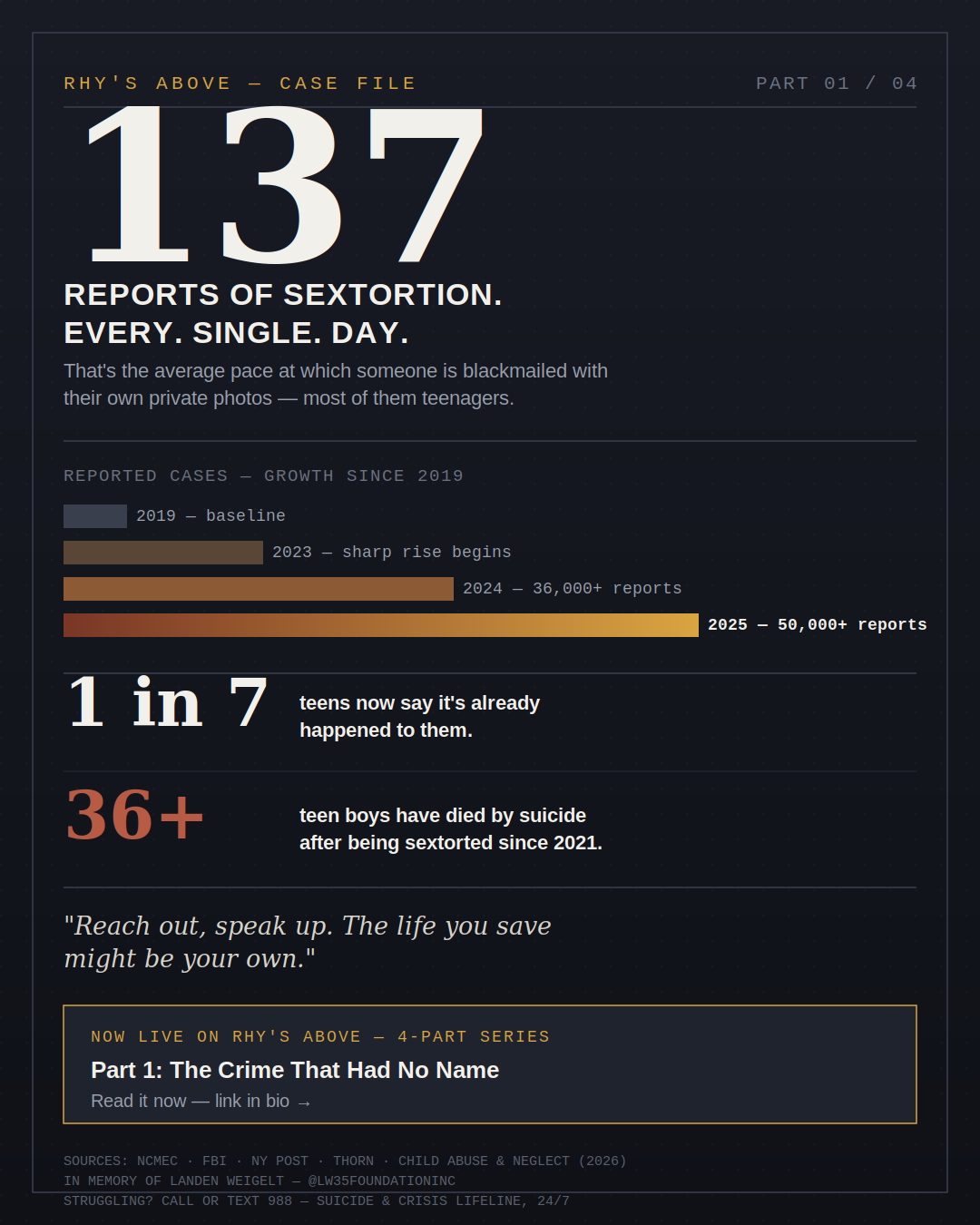
These deaths are only a small part of male suicides in the United States each year, but the true number is likely higher. Death records do not always show a suicide, let alone the cause. Of those that are, many cases are never connected to online threats that may have happened hours or days before.
Why the Sudden Explosion?
Reports point to several likely causes, but research is still new.
First, organized crime groups have turned sextortion into a business. Some global crime groups, often called “Yahoo Boys” by law enforcement, target tons of teenagers at once. They use scripts and move fast. The goal is to go from first message to money demand within hours.
Reporting rules have also changed. A federal law called the REPORT Act took effect in May 2024. It requires social media and tech companies to report online sexual exploitation to NCMEC. This has helped reveal more cases that were hidden before.
AI has also made the problem worse. Sophisticated cammers can now create deepfake sexual images from normal social media photos. That means victims can be blackmailed even if they never sent a sexual image.
Lastly, more victims are reporting what happened. In 2025, NCMEC saw twice as many reports coming directly from victims. That may mean awareness campaigns are helping, even while the crime keeps growing.
What's Coming in This Series?
So far, much of the story I’ve uncovered is about teenage boys. That is not only because of reporting bias. The data really does show that boys are being targeted at high rates. This is different from older assumptions about image-based abuse. It also challenges the harmful belief that teen boys cannot be victims of sexual abuse.

Thank you for your support!
Click to make a one time or monthly donation to fund coping skills and self advocacy workshops, peer support popups, and educational materials such as this four part series. Leave a comment, share our work, or volunteer to make a difference today!
In Part 2, we will look more closely at this youth crisis. We will discuss real cases that helped lead to new state and federal laws. We will also talk about why sextortion is so dangerous for mental health and how parents, caregivers, and others can support victims.
There is also another story that gets less attention. Adult men, including military service members, are being targeted in similar ways. They may face similar mental health risks, but there is much less tracking for adults than for minors and presumed less reporting as well.
In Part 4, we’ll look at what actually helps and what does not. Because of the loss of my son Rhyland, forever 14, this topic is deeply personal to me. I still believe every suicide is preventable, even if we do not yet know how to prevent every suicide. Sextortion is one part of the youth suicide crisis where families, schools, and platforms can make real progress.
Thank you for reading and for helping end the stigma around suicide and mental health. Stigma continues to be the #1 blocker that keeps people from getting help. As always, reach out and speak up. The life you save might be your own.
Until next time,
Jen
Stay tuned for Part 2: Boys Like Us, next Tuesday, July 21st.
Landen’s loved ones opened a foundation, LW35, in his honor to continue educating people about the dangers of sextortion. You can find them on Instagram @lw35foundationinc. We thank Landen’s family for openly sharing his story and continuing this important work.
*A full list of resources will be shared at the end of the series. Please keep learning, ask questions, and share helpful sources. Honest discussion about this topic can save lives.